

The system the business runs on is showing its age. It only works inside the office, every change takes longer and costs more than the last, and someone has suggested starting again from scratch.
Before you do, it’s worth knowing that the SQL Server database underneath is very often fine. A well-designed database from 2008 will still do its job. What holds the business back is usually the application on top of it. That might be a VB6 program, a set of classic ASP pages, or a desktop application that only runs on Windows inside the building.
CDE Systems modernises that layer, and fixes the database itself where it needs fixing, one stage at a time and with the existing system running throughout. Before anyone builds anything, we’ll review your application free of charge and tell you what we’d do, which might be nothing yet.
What “legacy” usually turns out to mean
The application is old, but the data isn’t. VB6, classic ASP, WinForms, Delphi, PowerBuilder, an Access interface, or a web application on a framework that’s no longer supported. It works. It’s just expensive to change and impossible to reach from outside the office.
Or the schema is the problem. Sometimes it really is the database. There are no foreign keys, every column is an nvarchar(255), business rules are buried in triggers, and the data model fits how the business worked twenty years ago.
Or the person who built it has gone. It works, nobody understands it, and every change is a gamble. That calls for a different starting point. See legacy software rescue.
The three need very different answers, and the review tells you which one you have.
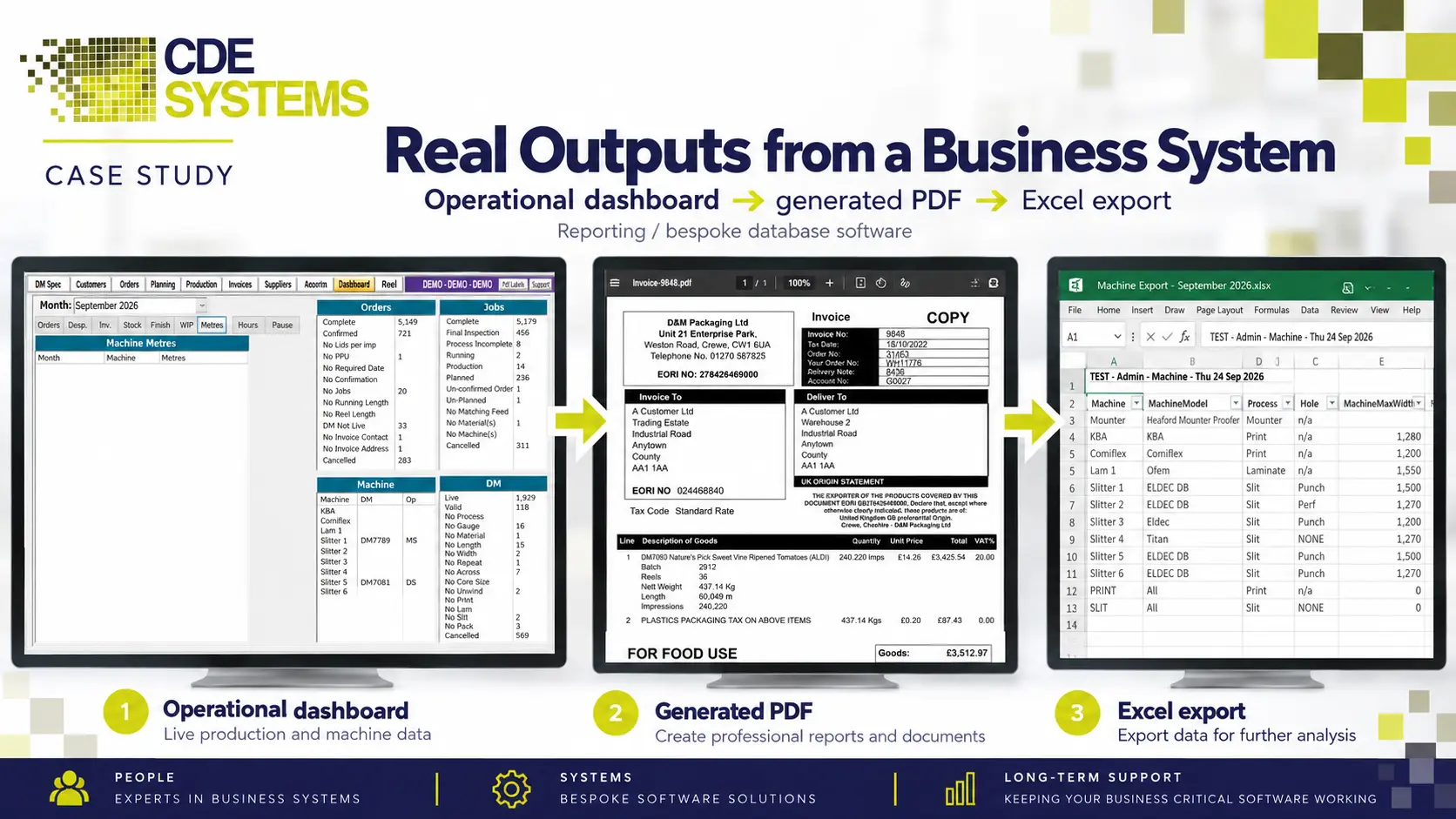
What changes, and what doesn’t
| Now | After |
| It only works inside the office | It works in a browser, at home, on site or at a customer’s office |
| People in the field phone in or fill in paper | They use an app on a phone, working from the same data |
| Customers ring to ask where their order is | They look it up in a portal |
| Reports get exported into Excel and tidied by hand | Reports come out ready to use |
| The system can’t talk to anything else | It has APIs, so other software can connect to it |
What stays the same is the data, the history in it, and the business rules that have built up over the years.
Modernising what sits on the database
- Browser access, so the system works from anywhere. See web applications for existing systems
- Mobile apps for people out on the job. See mobile apps for existing systems
- Customer and supplier portals over the same data. See customer portals and self-service
- APIs, so the system can talk to everything else you run. See SQL Server integration and APIs
- Reporting people will use. See reporting and business intelligence
- A move to Azure, where it makes sense for cost, access or resilience. See Azure SQL and cloud
We build with current technology, including .NET and C#, Node.js, React and React Native, against the database you already have.
When the database itself needs work
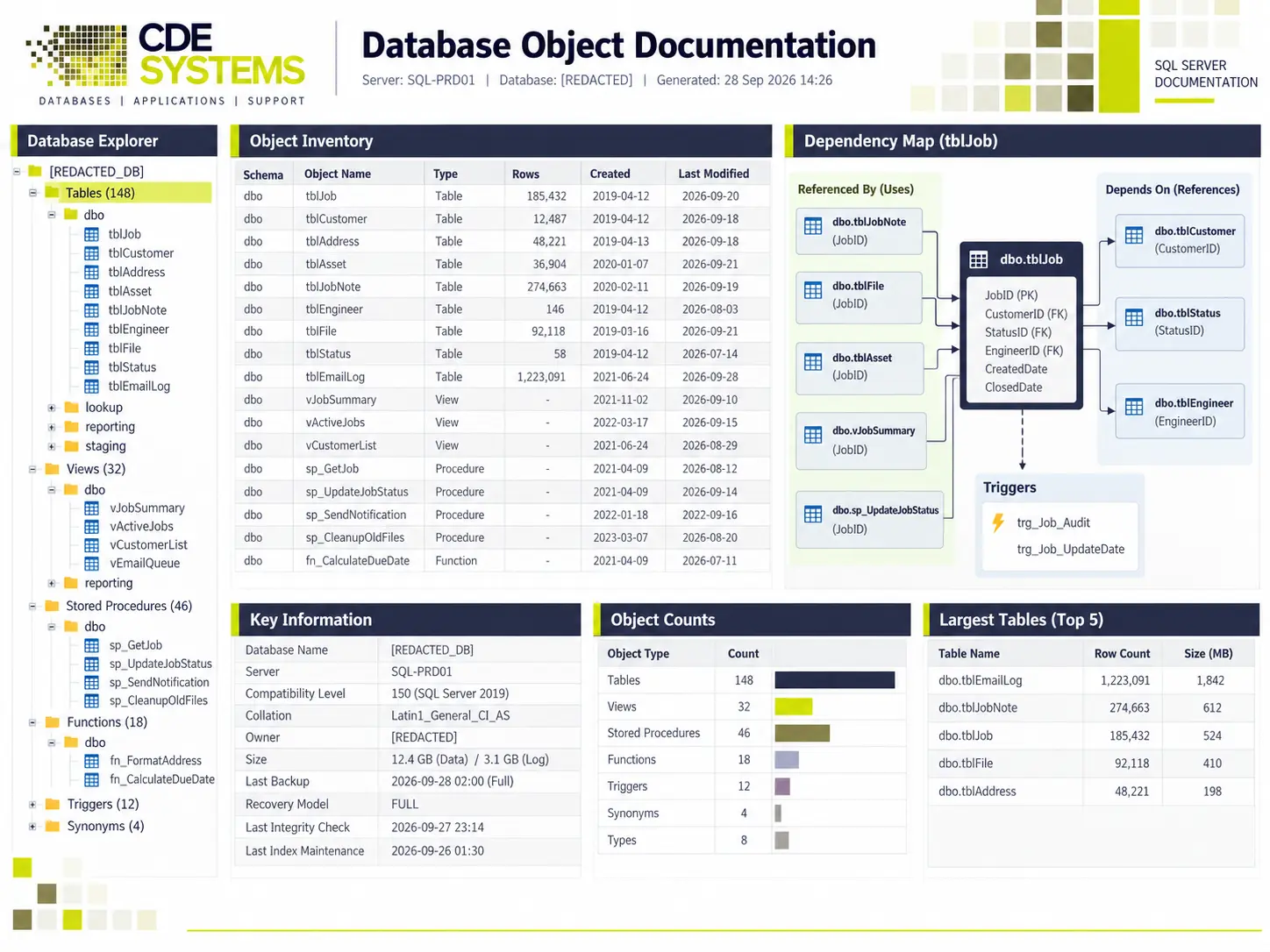
Where the schema is the problem, it can usually be fixed in place without a rebuild. Business logic moves out of triggers and into code that can be tested. Data types are corrected. Keys and constraints are added, so the database stops accepting data it should never have accepted. Tables that have been carrying three things at once are split, and stored procedures are rationalised. See T-SQL development.
It’s done gradually, with the application running the whole time.
One stage at a time
Nothing here needs a big-bang cutover. We take the thing that hurts most, build it, put it in front of the people who’ll use it, and get it working before starting on the next.
The existing system keeps running throughout. If you stop after the first stage, the first stage still works and still earns its money.
A free review first
Before anyone talks about building, we’ll look at your existing application free of charge.
You send us a copy through our secure upload. We look at how it’s put together, where the business logic sits, what state the code and data are in, and what would change under each of the options above. Then we ring you to go through what we found and what we’d suggest. What you do next is up to you, including nothing.
Wouldn’t it be cheaper to start again?
Sometimes it would, and if so we’ll say. The review answers four questions:
- Is it better to replace the application or extend its life?
- Will keeping it going cost more or less than replacing it over the next three years?
- How much work would it take to move the platform?
- How much work would it take to re-engineer the application?
You get our answer to all four, including when the answer is that you don’t need us yet.
Modernised without starting again
At Aire Valley Catering, the office system is an Access application over SQL Server. Over the years it has gained native apps for engineers, which work offline in kitchens with no signal, and customer portal apps for both app stores, all working from the same data. The next stage is a defined API layer with a React front end, planned so the engineers keep the offline working they depend on.
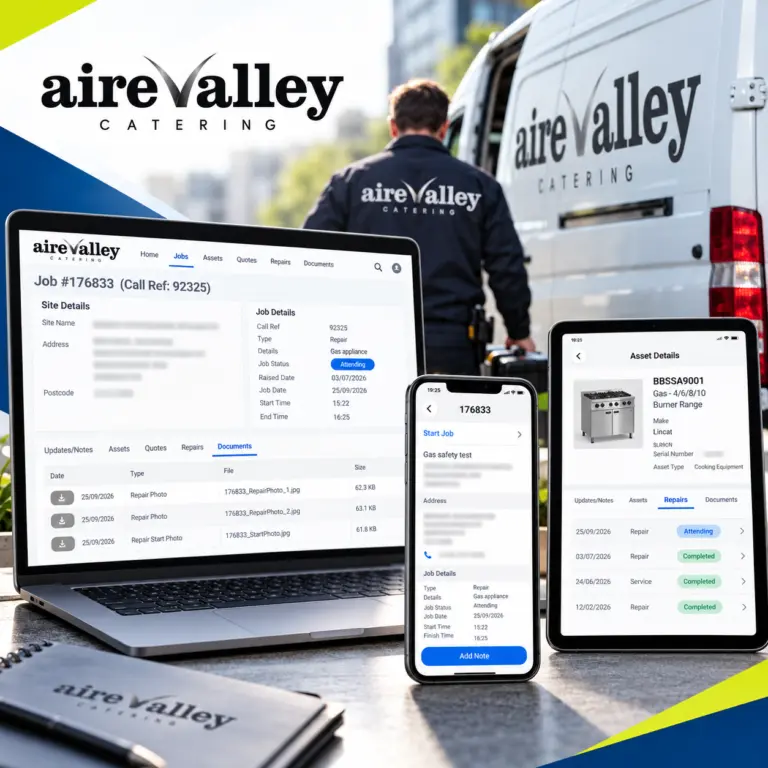 Commercial Catering Service & Maintenance (field service)
Aire Valley Catering
Field service apps that work with no signal
Aire Valley Catering’s engineers work in commercial kitchens across the UK, often with no usable signal, and every job still has to be recorded. We built four production…
View case study
 Transport and logistics
ACC Worldwide
A faster SQL Server system, noticed on day one
ACC Worldwide’s staff used one business system all day, every day, and it was slow. We worked on the SQL Server environment behind it. The speed-up was immediate,…
View case study
 Travel and leisure (adventure travel and expeditions)
Jagged Globe
Keeping bookings, customer records and the website in step
Jagged Globe runs on an internal database and a booking website that have to agree every day, and sometimes they didn’t. We traced and fixed the transfers between…
View case study
Not sure whether to extend it or replace it?
Send us the application and tell us what it does and what’s holding you back. We’ll review it free and tell you what we find, including when the honest answer is that the database is fine and only the application on top needs work.