

Some businesses work in a way no package quite understands, and the gaps get filled with spreadsheets and re-typing. Others already run on a system somebody built for them years ago, which now needs someone to look after it.
CDE Systems has built and supported systems like these since 1999, for businesses, councils, government departments and NHS organisations. If a package would serve you better, we’ll say so before anything gets built.
You run the business. We look after the system it runs on, and the data, the documents and the decisions stay with you.

Where are you with it?
Find the line that’s closest.
| If this is where you are | Start here |
|---|---|
| Something has stopped and people can’t work | Emergency database support. Ring, don’t email |
| The data is corrupt, missing or won’t open | Database recovery and data rescue |
| It runs, but whoever built it has gone | Database and inherited system support |
| You’d like to know what state it’s in before deciding anything | Database health check |
| You need a new system, or the spreadsheets have had their day | Business software and database design |
| Two systems should agree and don’t | Database integration and APIs |
| It works, but it can’t do what you need now | Modernise existing systems |
If none of them fits, ring and describe what’s going on. You don’t need to know what the system is built in.
When off-the-shelf doesn’t fit
A lot of businesses are better off with a package. It costs less up front and more people support it, and you could be using it next month. If that’s where you are, it’s what we’ll recommend.
Bespoke is worth it when the way you work is what makes you money. That might be a process no product handles, or a package that would make you change how you operate. Sometimes it’s three packages that still leave someone typing from one into the next.
The systems we build are usually a few things joined together, because that’s how a business runs. Job and works management, stock and products, suppliers and contractors, quoting and ordering, compliance checks, asset tracking and scheduling are the common ones.
What we work with
Our main specialisms. Microsoft SQL Server, from current versions through to SQL Server 2025, plus Azure SQL Database, Managed Instance and SQL Server Express. Microsoft Access, from Microsoft 365, Access 2024 and 2021 back to the versions before them.
Also regularly. MySQL and MariaDB, and PostgreSQL, which is where a lot of new systems end up.
Behind modern applications. MongoDB where a document store suits the data better than tables. Redis for caching and background queues. SQLite inside mobile apps, which is what lets an app keep working without a signal. Firebase and Firestore where an app needs them.
We’d pick the database that suits the job over the one that’s in fashion, and for most business systems that’s still a relational database.
And the old ones. SQL Server 2005, 2008 and 2012. MySQL 5.x. Access 97, 2000 and 2003. Plenty of businesses still run on versions that went out of support years ago. We’ll keep them going, and help you decide when it’s worth moving.
More than the database
A database earns its keep through what’s built around it, such as reports people read and an interface staff can use away from a desk. It might be an app for people out on site, a portal where customers check things for themselves, or a link to the accounts and email.
Reporting and business intelligence · Web applications · Mobile apps · Customer portals · Azure and cloud
Why people ring us
Databases are what we do. We’ve worked on them for over 25 years. We’re not a general IT company with a database sideline.
We take on systems somebody else built. No documentation, and no developer left to ask. That describes most of the systems we look after, so it doesn’t put us off.
You speak to the person doing the work. There’s no ticket queue or first-line script, and you’ll get the same people next time you ring.
You’ll hear it when the answer is to change nothing. If the system is fine, or a small fix costs less than the project you’ve been quoted, that’s what we’ll tell you.
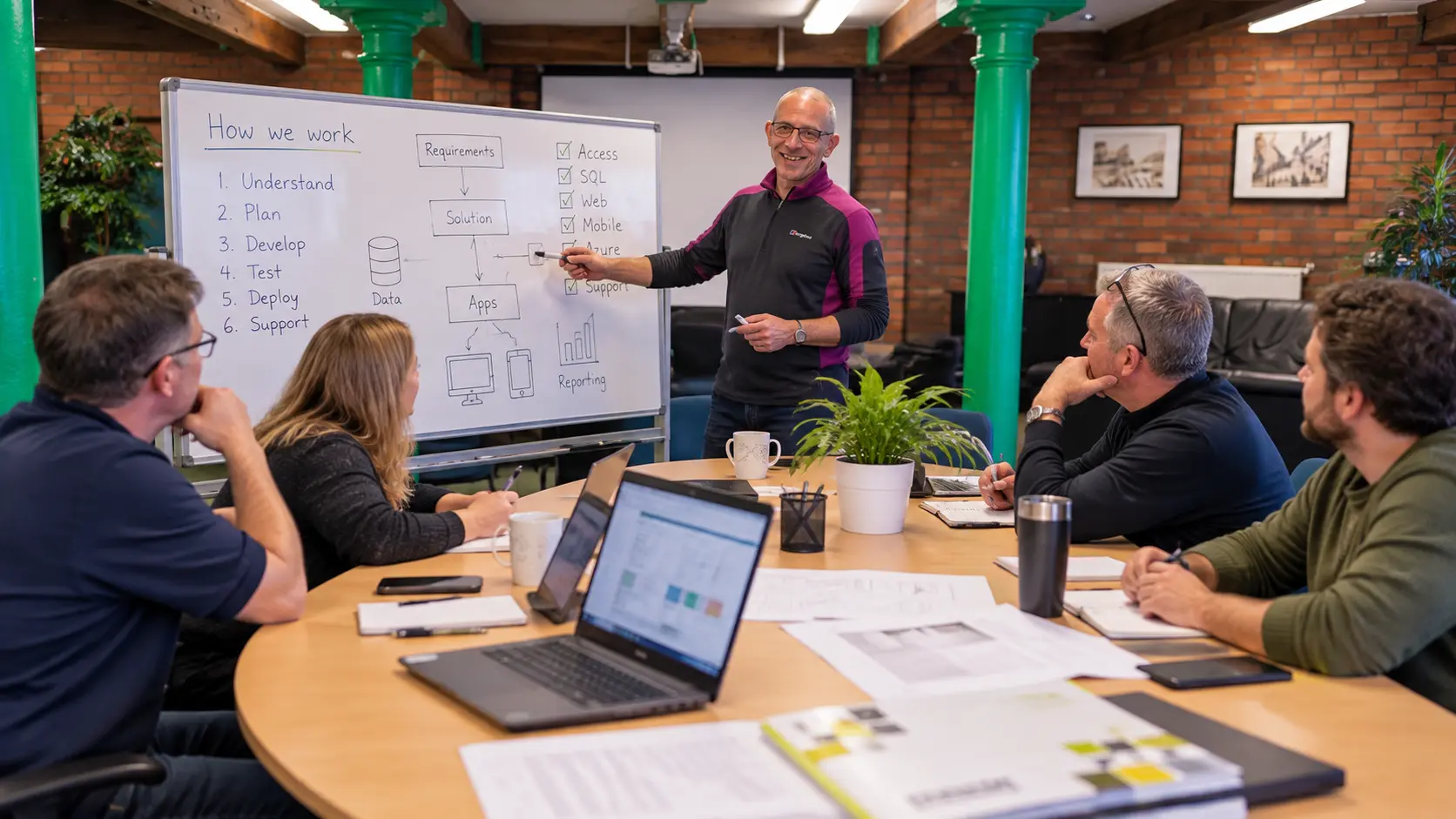
How CDE Systems works with clients
Some of the systems we’ve built and look after
Lilleker Engineering: replacing a legacy job costing system, built around how the business runs
A Rotherham fabrication business replaced an ageing job costing system with one that follows a job from enquiry to invoice. Its staff tested it as it was built, and several of the best features came from what they found.
Bolt & Nut Manufacturing: certificates, stock and live job tracking in one system
A fastener manufacturer’s system had been extended over the years and still relied on people remembering things. We added stricter certificate controls, barcode tracking on the shop floor and reports that don’t need chasing.
D&M Packaging: quality management, supplier control and production planning
A packaging manufacturer’s quality system now handles investigations, supplier problems and complaints from start to finish. Development is continuous, so changes arrive while the problem is still live.
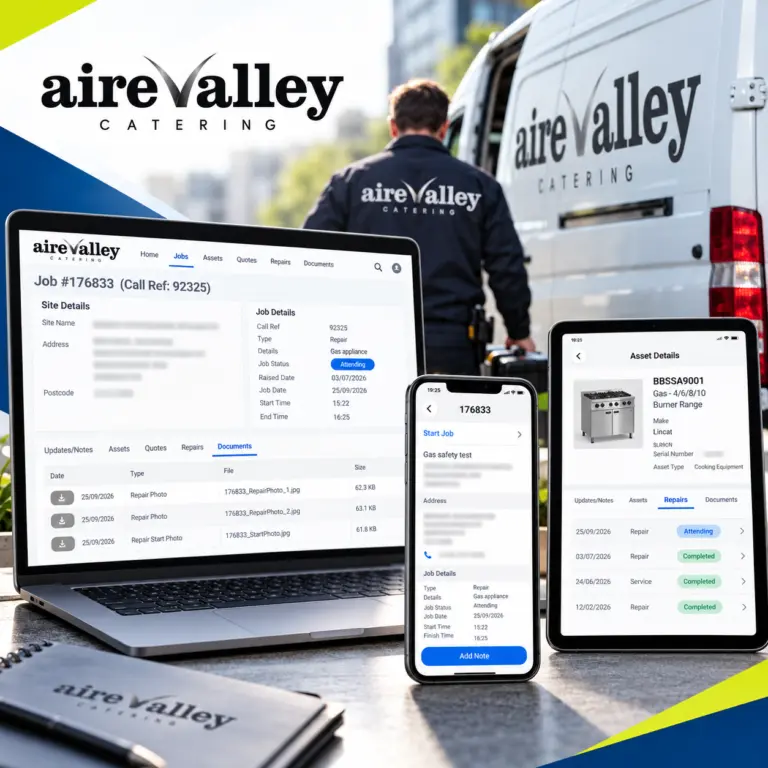 Commercial Catering Service & Maintenance (field service)
Aire Valley Catering
Field service apps that work with no signal
Aire Valley Catering’s engineers work in commercial kitchens across the UK, often with no usable signal, and every job still has to be recorded. We built four production…
View case study
 Transport and logistics
ACC Worldwide
A faster SQL Server system, noticed on day one
ACC Worldwide’s staff used one business system all day, every day, and it was slow. We worked on the SQL Server environment behind it. The speed-up was immediate,…
View case study
 Travel and leisure (adventure travel and expeditions)
Jagged Globe
Keeping bookings, customer records and the website in step
Jagged Globe runs on an internal database and a booking website that have to agree every day, and sometimes they didn’t. We traced and fixed the transfers between…
View case study
Tell us what you’re running, or what you need
What the system does, who built it and what’s wrong with it. Or, if there’s nothing yet, what the business needs to do that it can’t. We’ll come back with what we’d do and what it would cost, and that includes telling you when to leave things as they are.