
The system was built years ago, by a developer who has since moved on or a supplier that no longer exists. It does what the business needs, everyone works around its quirks, and nobody is quite sure what it runs on. When something goes wrong, it’s hard to know who to ring.
It’s easier when someone who knows the system is looking after it. The backups get tested and problems are caught before your users notice. The report finance has been asking for gets built, too.
That’s the support CDE Systems has offered since 1999. Ring and describe what the system does. You don’t need to know whether it’s Access, SQL Server, MySQL or something else, because finding that out is part of the job. The system, the data and the documentation stay yours.

What people ask us to look at
Most of the systems we look after weren’t built by us. The calls tend to start in a similar way.
- The developer retired, or the supplier was dissolved, and there’s no documentation
- The person in the office who sort of understood it left a couple of years ago
- It works, but everyone has a list of things they’ve stopped asking it to do
- Errors appear without an obvious cause, sometimes for only one user
- It’s slower than it was, though it’s hard to say when that started
- Someone has asked whether the backups would restore, and you couldn’t say
If that’s where you are, you’re in good company. Systems that have been running for years pick these things up, and it isn’t a judgement on whoever built it.
What it’s like once we look after it
You have a number to ring, and the person who answers already knows your system. Backups are tested by restoring them. Integrity is checked often enough that corruption is found within days. You hear about a disk filling up or a file reaching its limit from us, before anyone in the office notices.
The changes people have been waiting for get made. That might be a new report, an extra field or a form that follows the way the job is done now.
How we take a system on
- Work out what it does. Where the data lives, what’s holding it together, and what’s likely to cause trouble next.
- Fix the long-standing problems everyone has been working around.
- Write down what matters, so the knowledge belongs to the business and not to one person.
- Look after it day to day, with changes as well as fixes.
- Say what’s worth improving, and what’s fine as it is.
If it turns out the system needs more than support, there’s more on legacy software rescue.
Looking after it day to day
- Backups checked by restoring them. A green tick in a job log isn’t the same thing
- Integrity checks, run on a schedule
- Maintenance, meaning indexes, statistics and log management, which is often the housekeeping that was never set up
- Growth tracked, so you know before a disk fills or a file limit is reached
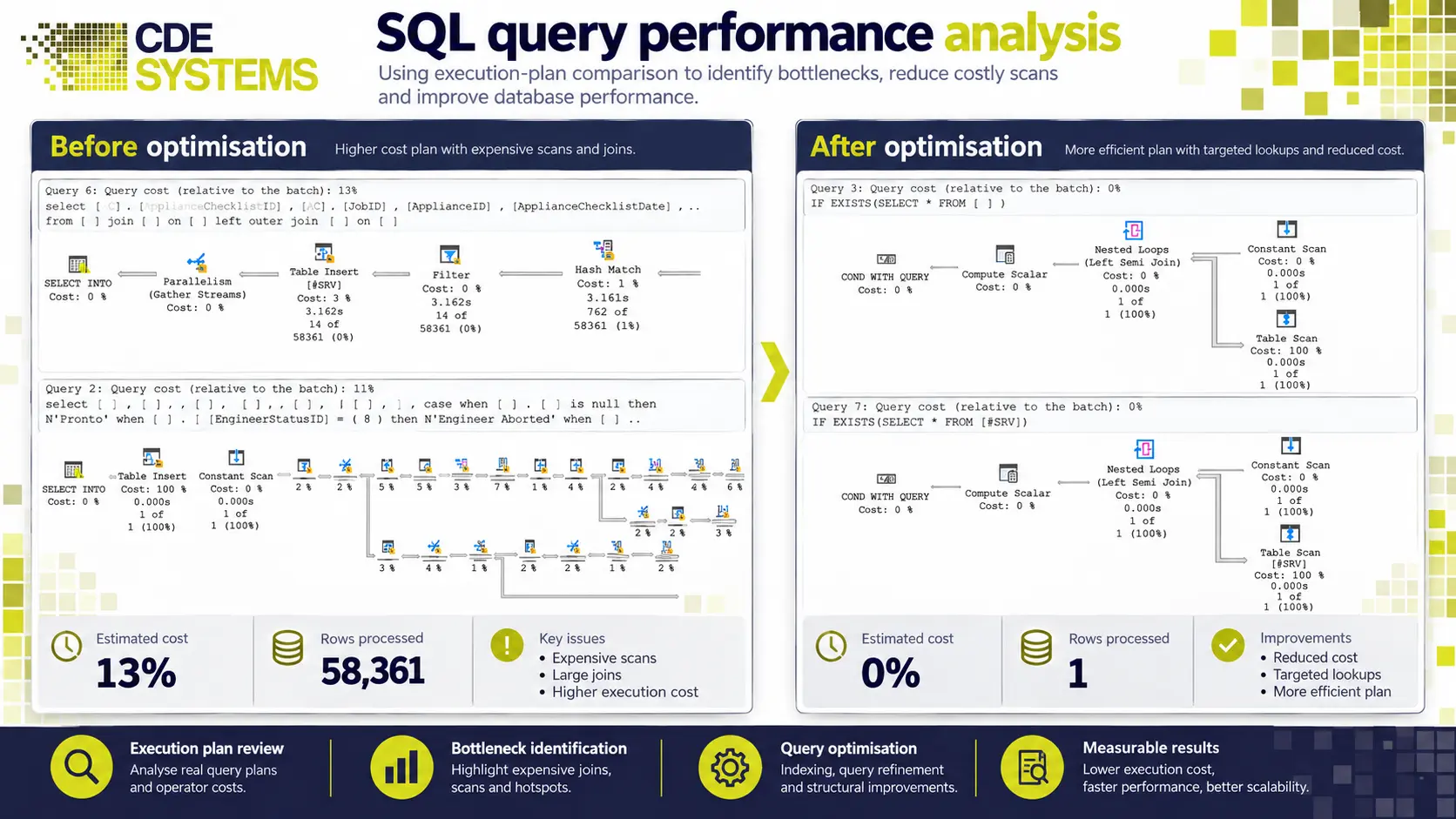
- Performance measured against a baseline, so “it’s got slower” becomes a number
- Security reviewed, including accounts that still belong to people who’ve left
- Alerts on what matters, so a problem reaches us before it reaches your users
Most of the clients on a managed arrangement go months without needing to ring us, and that’s how it should work.
When something goes wrong
Some problems build up slowly, like a system that has been getting slower for months. Others arrive overnight, often after a Windows or Office update. Users lock each other out, connections and permissions fail, or a report produces figures that don’t add up.
We find the cause, and explain in plain English what it will take to fix. If something has stopped and the business can’t work, go straight to emergency database support. If data is corrupt or missing, see database recovery.
Changes as well as fixes
Most calls aren’t about breakages. Someone needs a report for finance, the process has changed, or a customer wants something the system was never built to do.
We do that work as it comes in. Small changes usually go through in days. Anything bigger is scoped and priced first, so you can decide whether it’s worth doing. And if you only want half an hour with someone who knows, to sense-check a quote or get a second opinion before a decision, ring. It won’t start a sales process.
We don’t even know what it’s built in
That’s fine, and it’s common. Tell us what the system does, who uses it and what it looks like when it opens, and we’ll find out the rest, usually by connecting to it with you watching. We’ve worked with Access, SQL Server, MySQL, PostgreSQL and a long list of older and less usual platforms. Mixed environments, where one system feeds another, are among the things we see most.
How it’s charged
There are two ways to have us look after a system, and you’re dealing with the same people whichever one you choose.
ManagedWe take responsibility for keeping it running: monitoring, tested backups, maintenance, and problems raised before your users find them
| Arrangement | How it works |
|---|---|
| Support agreement | An agreed allowance of support time each month, with a defined response commitment for faults, fixes and smaller changes. |
The first conversation, where you describe the system and we tell you what we’d suggest, costs nothing.
How remote support works · How we work
If it’s urgent now, ring. Don’t email. Emergency database support
Where we’ve done it
“The ongoing support and willingness to adapt the system to our changing requirements has helped us improve reporting, budgeting and financial visibility across the business. New features are delivered quickly and issues are resolved efficiently, allowing our team to focus on running the business.”
Budgen Motors
Case Studies
 Commercial Catering Service & Maintenance (field service)
Aire Valley Catering
Field service apps that work with no signal
Aire Valley Catering’s engineers work in commercial kitchens across the UK, often with no usable signal, and every job still has to be recorded. We built four production…
View case study
 Transport and logistics
ACC Worldwide
A faster SQL Server system, noticed on day one
ACC Worldwide’s staff used one business system all day, every day, and it was slow. We worked on the SQL Server environment behind it. The speed-up was immediate,…
View case study
 Travel and leisure (adventure travel and expeditions)
Jagged Globe
Keeping bookings, customer records and the website in step
Jagged Globe runs on an internal database and a booking website that have to agree every day, and sometimes they didn’t. We traced and fixed the transfers between…
View case study
If you already know what it’s built in
Tell us what you’re running
What the system does, who built it, roughly how many people use it, and what’s going wrong. We’ll tell you whether we can support it, how we’d go about it and what it would cost, even if nobody has touched it in ten years.