

Most businesses don’t set out to buy software. They set out to streamline their processes. Maybe quotes get built across three spreadsheets and job sheets are typed up multiple times. Maybe finding out where an order is means ringing two people. Maybe the software package you bought does 70% of it but fights you on the rest.
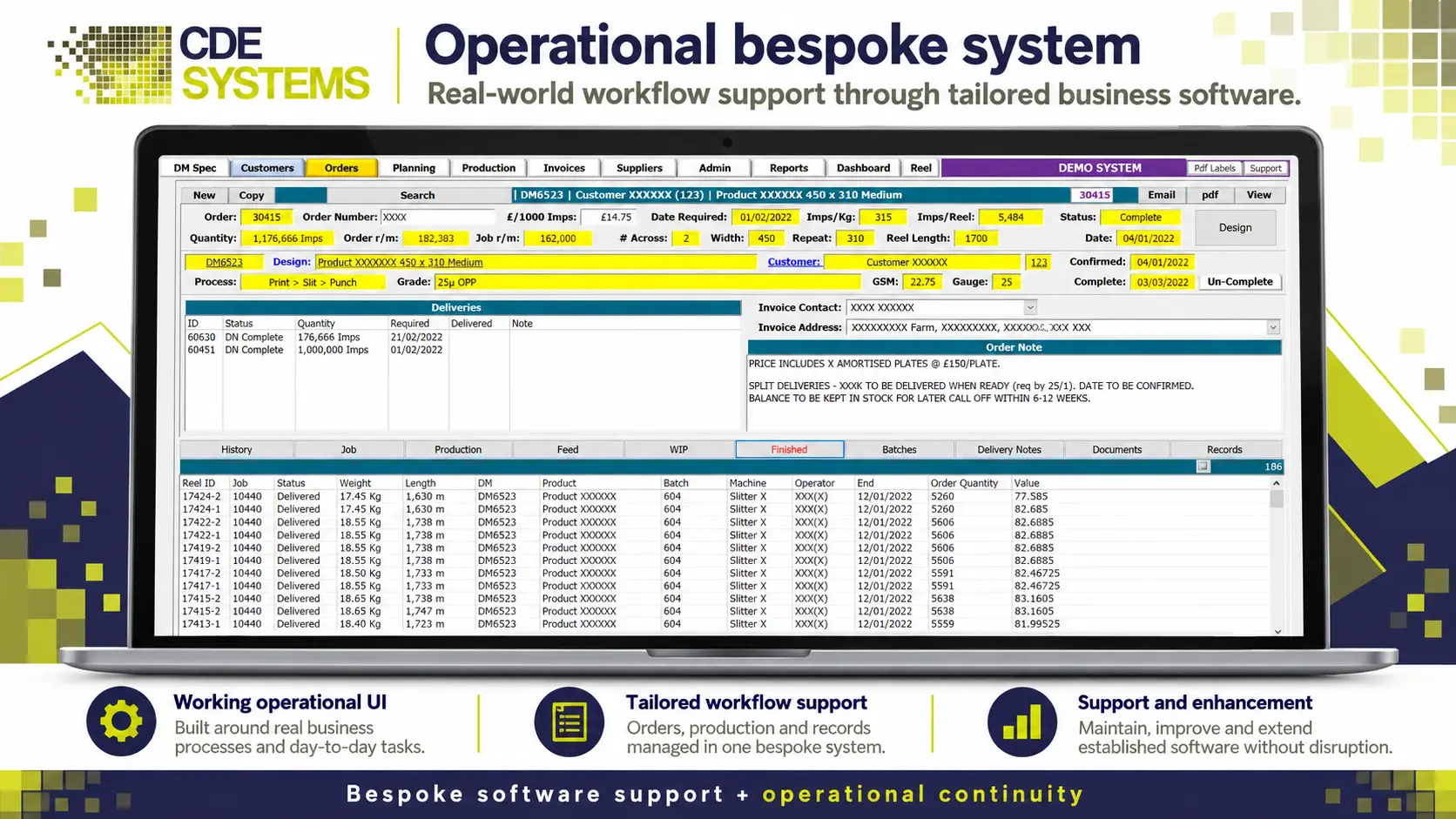
A system of your own works the other way. It follows the job from the first enquiry to the invoice. Each figure is entered once and turns up wherever it’s needed, and the people who use it all day find it quick.
CDE Systems has designed and built business software for companies, councils and government departments since 1999. We start with how the work moves through your business.
We fix the price with you once the system is specified, and build it in stages you can see working. What we build belongs to you.
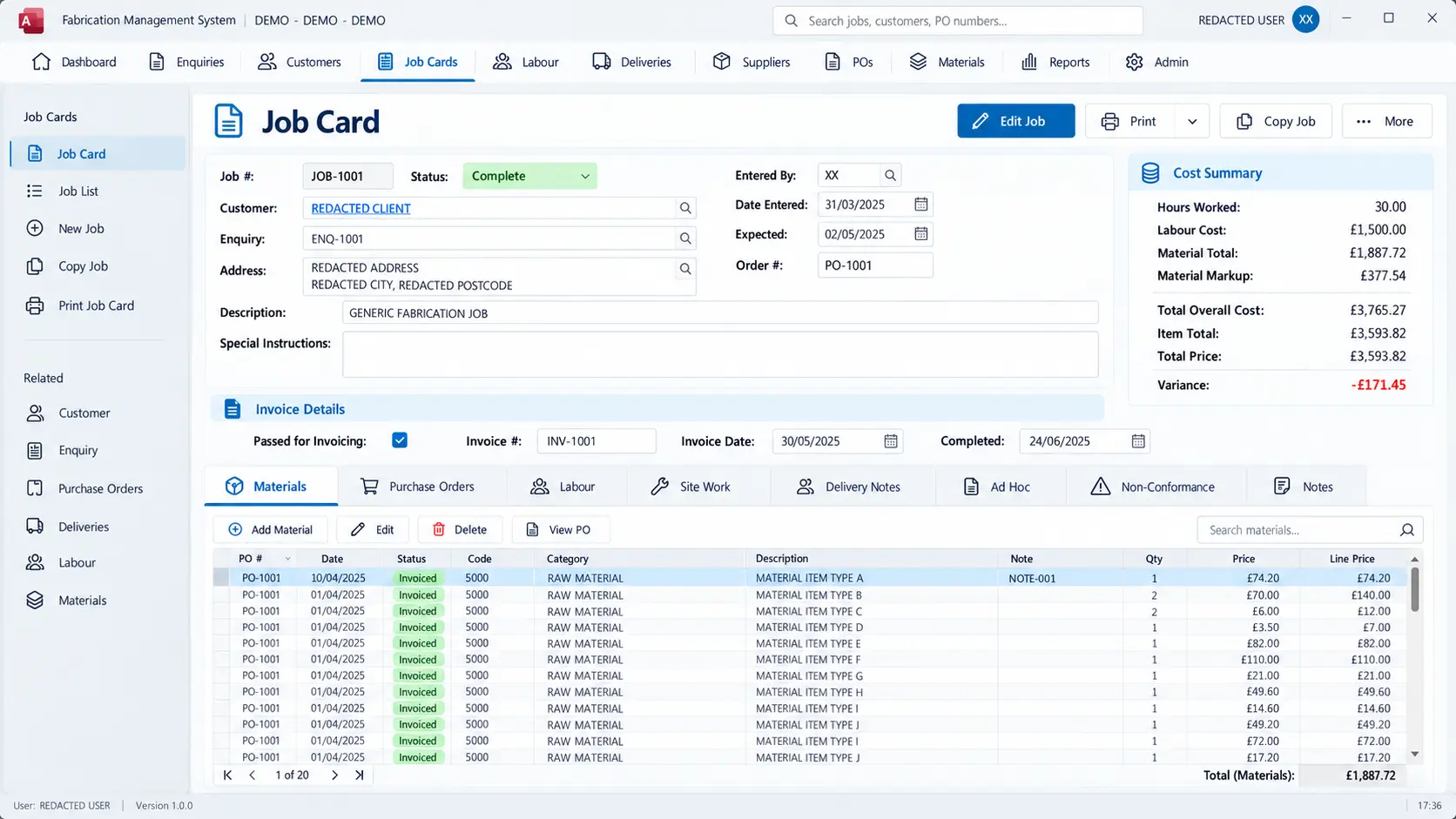
Where most people start
- The quoting, the job list or the stock figures live in spreadsheets that one person understands
- The same details get typed into two or three places, and the figures drift apart
- Checking where a job has got to means asking whoever last touched it
- Month end means a day of reconciling before anyone can trust the numbers
- A package handles the standard parts, and the parts that make you different sit outside it
The systems we build tend to be a few of these joined together. Job and works management, stock and products, suppliers and contractors, quoting through to invoicing, compliance checks, asset tracking and scheduling. Inspections and display screen equipment (DSE) assessments fall in there too, where the record of having done it matters as much as the doing.
What a system built for you should do
- Fit the way you work, so you aren’t reshaping the business around it
- Take each figure once. The order details that go into the job go on to the invoice and the accounts. Database integration
- Catch mistakes when they’re made, while they’re still easy to fix
- Be quick to use. It should be easy to learn for the people who’ll spend their day in it. That means the keyboard where there’s a lot to enter, and an interface laid out in the order the job is done
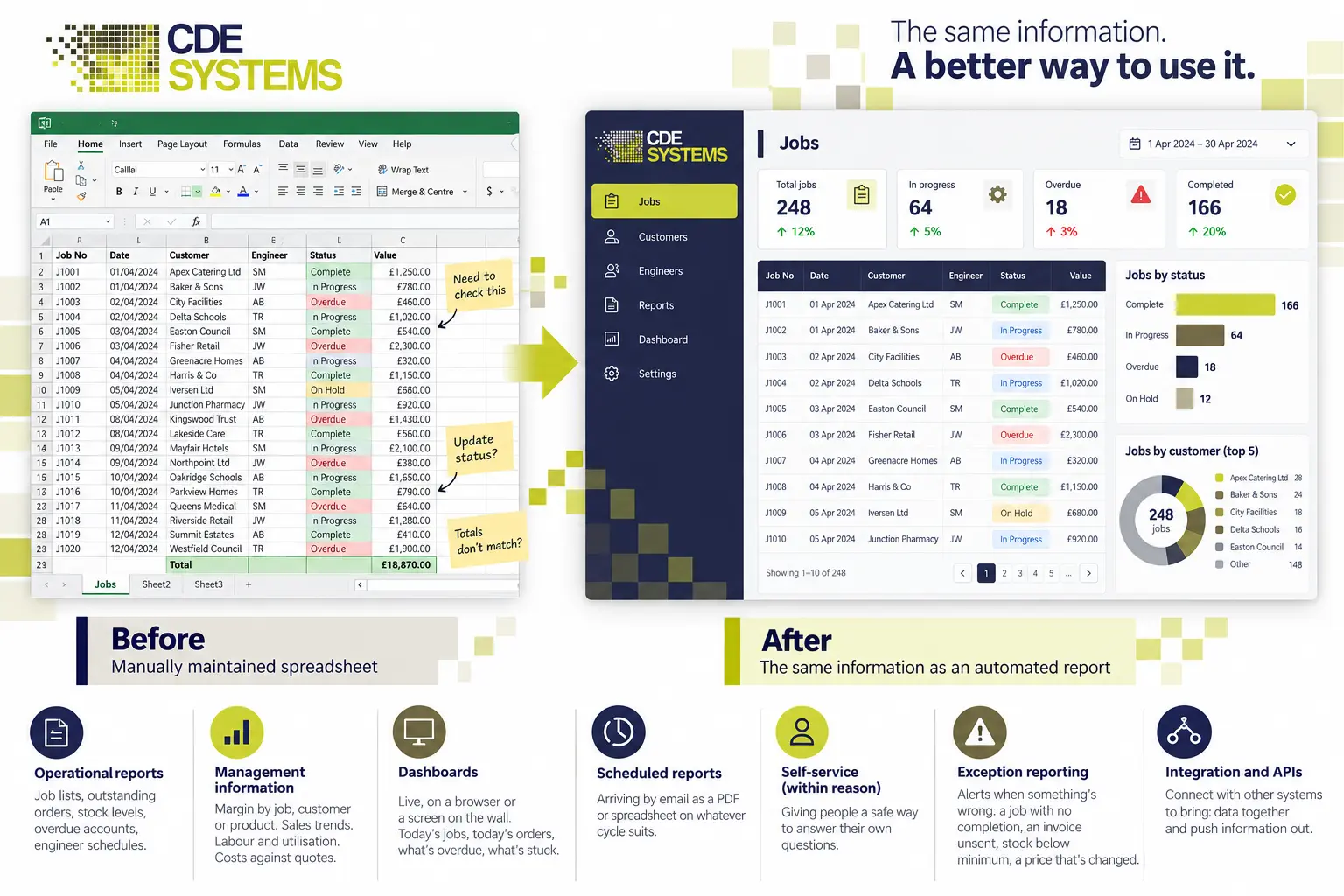
- Produce finished output. Reports and documents that go out as they are, with no tidying in Excel first. Reporting and business intelligence
- Work away from the office where it needs to. Web applications · Mobile apps
- Change when the business does, without starting again
We start with how the work moves
The systems that go wrong are usually the ones built straight from a list of features somebody asked for. We start by following a job through the business. That includes the steps people have stopped mentioning because they’ve always done it that way, and the workarounds left over from the last system.
We talk to the people who do the work as well as the managers, because they know which fields get ignored and where the extra spreadsheet lives. This stage usually turns up two or three things worth changing before anything is built, and it’s where most of the value in a project comes from.
How it gets built
- A free first conversation. On the phone, or a visit. You get a rough idea of cost, and many conversations end there, which is fine.
- A requirements report, usually half a day to a day on site, talking to users and looking at your current data.
- A full specification, one to two days on site. It sets out what the system does, how the data fits together, security, testing and the timetable.
- A fixed price for the build, from the specification.
- Built in stages. Most first versions are in front of users within weeks, while changes are still cheap to make.
- Tested by the people who’ll use it, before go-live. They always find things, and it costs far less to fix them then.
Underneath, it’s usually SQL Server or Azure SQL, with Access where it suits a single site and a modest number of users. We use MySQL where an existing system or hosting arrangement calls for it. The web and API layer is .NET and C#, or Node.js and NestJS. Browser interfaces are React and Next.js, and mobile apps are React Native, so there’s one app to maintain for iPhone and Android. It’s hosted in Azure or on your own servers. SQL Server design · Access design
What it costs
You’ll know the price of the build before you commit to it. The specification produces the figure, and its cost is credited against the build if you go ahead. If you don’t, the specification is yours to take to anyone.
Once it’s live, support is usually 10–15% of the development cost each year. That covers phone and email support and minor updates, such as a new report or an extra field, under a fair use agreement. Bigger changes are scoped and priced separately.
What you own
Your data, in a format you own, on your own hardware or in the cloud. Documentation of how the system is put together. Software escrow is available, so the source code is held by an independent third party and released to you if we couldn’t carry on supporting it.
And someone to ring afterwards who remembers building it. A lot of the systems we’re called in to look at were built by someone who can no longer be reached.
Should it be bespoke at all?
Not always, and we’ll say so at the start. If a package does what you need, buy the package. It’ll cost less and be supported by more people, and you’ll be using it sooner. Plenty of businesses are better served by Sage, a decent CRM or an industry system than by anything we’d build.
Bespoke is worth it when the way you work is what makes you money, or when you’ve already bought the packages and someone is still typing between them.
Where we’ve done it
“Because of the ease of use and the flexibility of the software CDE have designed for us we have saved many hours of work. We have complex production and raw material monitoring needs and CDE has finally made it easy to track our operations.”
Delta Resins Limited
Case Studies
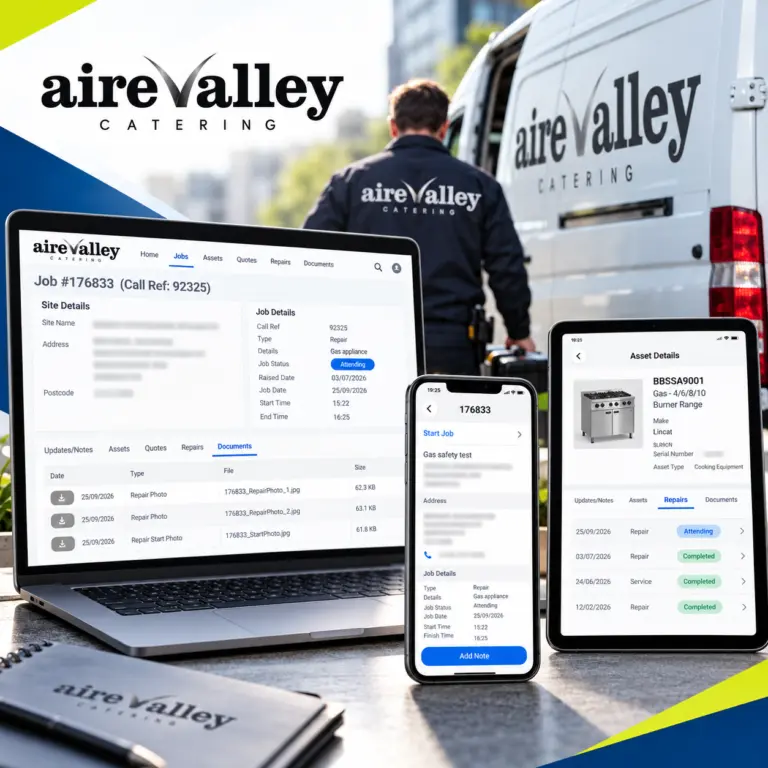 Commercial Catering Service & Maintenance (field service)
Aire Valley Catering
Field service apps that work with no signal
Aire Valley Catering’s engineers work in commercial kitchens across the UK, often with no usable signal, and every job still has to be recorded. We built four production…
View case study
 Transport and logistics
ACC Worldwide
A faster SQL Server system, noticed on day one
ACC Worldwide’s staff used one business system all day, every day, and it was slow. We worked on the SQL Server environment behind it. The speed-up was immediate,…
View case study
 Travel and leisure (adventure travel and expeditions)
Jagged Globe
Keeping bookings, customer records and the website in step
Jagged Globe runs on an internal database and a booking website that have to agree every day, and sometimes they didn’t. We traced and fixed the transfers between…
View case study
Tell us what the business needs to do
You don’t need a specification or a list of features. Tell us how a job moves through the business now, and where it gets stuck. We’ll tell you what we’d build and roughly what it would cost, including when the better answer is a package off the shelf.