
MySQL tends to sit underneath something else. It might be the website, or an online shop, or a web application somebody built for the business years ago. Often it’s still on the version and the backup the host set up at the start.
When it needs attention, it helps to have someone who knows databases look at it. That means backups that restore, queries that keep up, and data that reaches the office system without anyone copying it across.
MySQL isn’t our headline specialism. That’s SQL Server and Microsoft Access. But CDE Systems has worked with MySQL since 1999, up to MySQL 8.4 and 9, and it turns up in our work all the time. If you’d be better served by a web developer, we’ll say so.
Where we usually find it
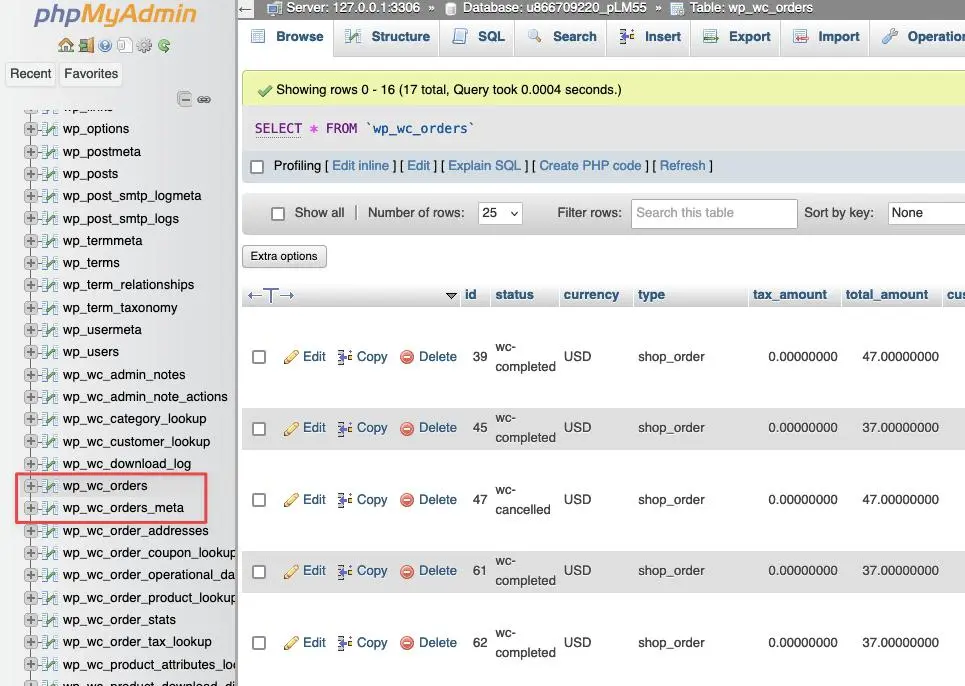
Behind a website. WordPress, WooCommerce, Magento and most web applications run on MySQL. When the website and the office system need to share orders, stock, prices or customers, the MySQL side is part of the job. Database integration
Inside an inherited system. A web application built for the business years ago. It works, MySQL is underneath it, and the developer has moved on. Legacy software rescue
Next to SQL Server or Access. MySQL on one side, a Microsoft database on the other, and data that has to move reliably between them.
On an old hosting account. Unpatched, and backed up by whatever the host does by default. That’s usually less than people assume.
What we do with it
Support and troubleshooting. Errors, crashes, connection problems and tables that have stopped behaving. Database support
Integration. Joining MySQL to the accounts, the office system, email or barcode scanners. This is the most common reason people find us for MySQL work.
Performance. Slow queries, indexing, configuration, and whatever makes a website crawl when it gets busy.
Recovery. Corruption, crashed tables and failed restores. Database recovery
Moving it. Version upgrades, a change of host, or a move to or from SQL Server. SQL Server migration
Backups that restore. The thing we find wrong on MySQL systems more often than anything else, usually because the host’s default was taken to be enough. Database health check
Data cleansing. Duplicates, gaps and inconsistent records. Data cleansing
MySQL or SQL Server?
It’s the question a lot of people arrive with, so here’s a plain answer.
MySQL makes sense where the system is web-based, where hosting cost matters, or where it’s already there and working. It also makes sense when the software you run expects it.
SQL Server makes sense where you need heavier reporting, or where the business already runs on Microsoft and wants straightforward links to Access and Microsoft 365. It’s also the usual step when the workload has outgrown what MySQL is doing for you.
Both are good databases. The right one is usually whichever your system already uses. Moving between them is a project, and it needs a better reason than preference.
When it’s a job for a web developer
If the problem is the website itself, such as the theme, the plugins or how pages look, a web developer is the person to ring. If it’s the data underneath, or getting that data in and out of the rest of the business, that’s us. Describe it on the phone and we’ll point you the right way.
Case Studies
 Commercial Catering Service & Maintenance (field service)
Aire Valley Catering
Field service apps that work with no signal
Aire Valley Catering’s engineers work in commercial kitchens across the UK, often with no usable signal, and every job still has to be recorded. We built four production…
View case study
 Transport and logistics
ACC Worldwide
A faster SQL Server system, noticed on day one
ACC Worldwide’s staff used one business system all day, every day, and it was slow. We worked on the SQL Server environment behind it. The speed-up was immediate,…
View case study
 Travel and leisure (adventure travel and expeditions)
Jagged Globe
Keeping bookings, customer records and the website in step
Jagged Globe runs on an internal database and a booking website that have to agree every day, and sometimes they didn’t. We traced and fixed the transfers between…
View case study
Tell us what MySQL is running
What it sits behind, which version it is if you know, what’s wrong with it, and what else it needs to talk to. We’ll tell you whether we can help, or who could.