- Client
- Aire Valley Catering
- Sector
- Commercial Catering Service & Maintenance (field service)
- Outcome
- Four apps in production, engineers working offline without losing data, and customers who can see their service history without ringing
- What we do
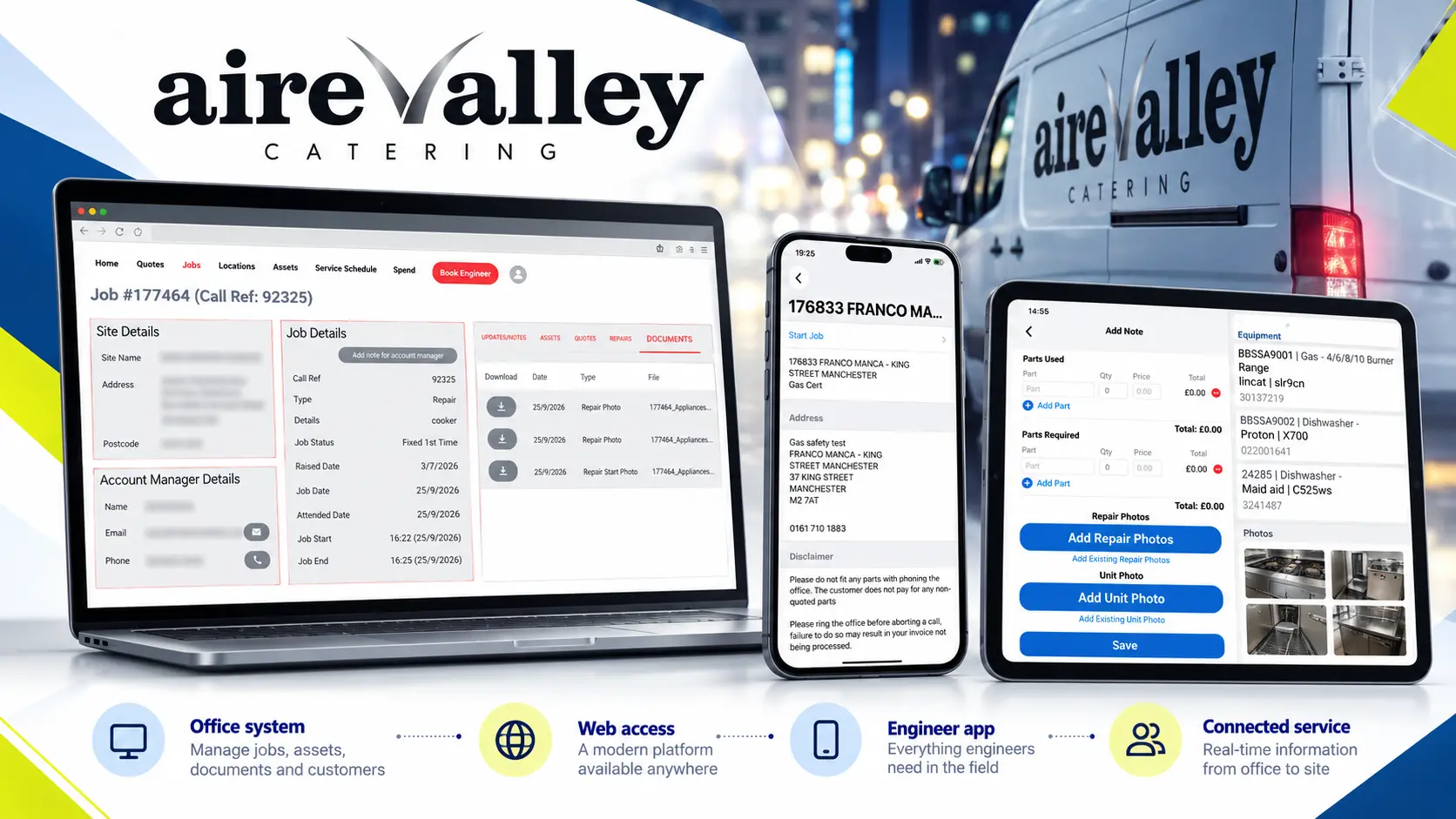
- Engineer apps for Android and iOS, customer apps for both, ongoing support and a roadmap for the next platform
- Technology
- Microsoft Access, SQL Server, native Android and iOS, React Native
The situation
AVC services and maintains commercial catering equipment. Its engineers use their phones to receive jobs, complete compliance reports, take photos and send it all back to the office.
Commercial kitchens are often in basements, behind thick walls, in buildings that were never designed with mobile coverage in mind. An app that needs a connection stops working exactly where the engineer needs it.
The office runs on a Microsoft Access application over SQL Server. So the problem wasn’t either end on its own. It was the gap between them, where a fleet of phones that are often offline have to send job data back complete and in the right order.
Four apps, two audiences
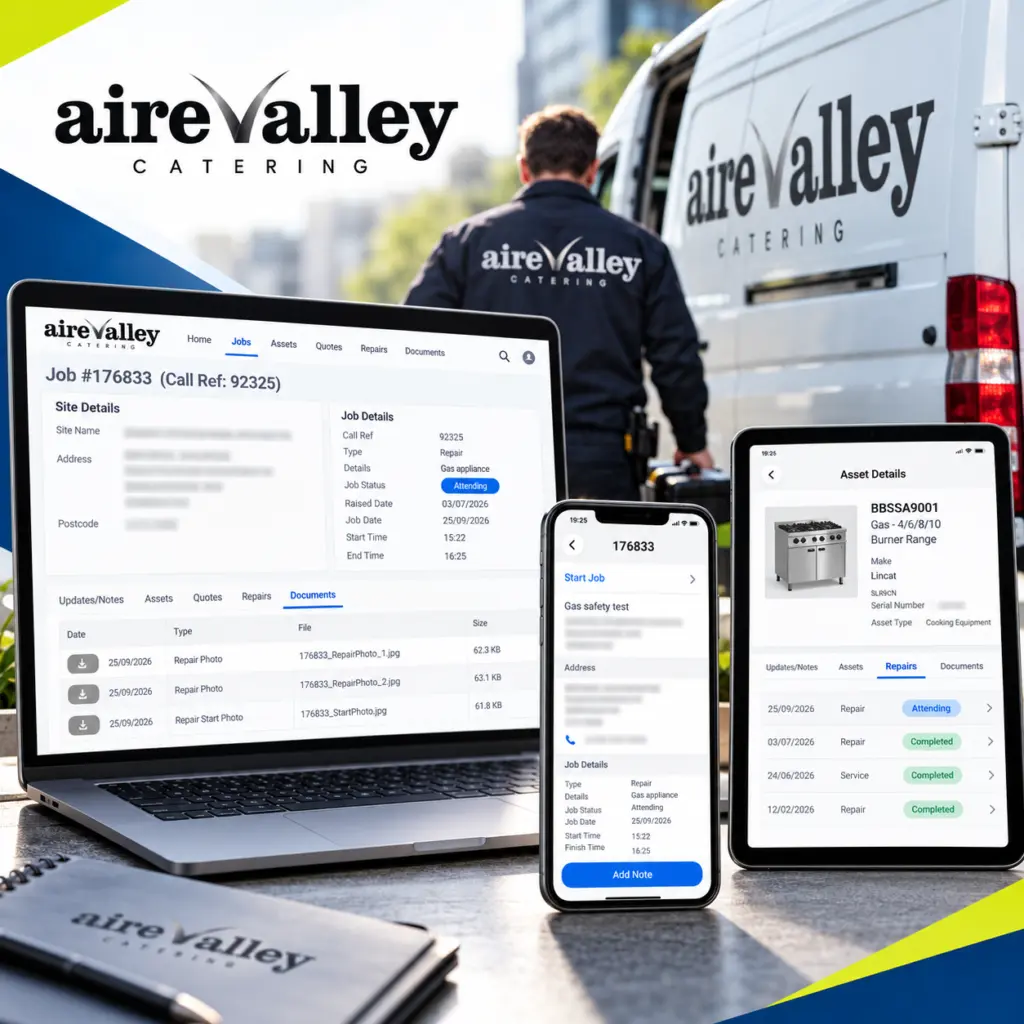
There are four apps across both app stores. Two are for engineers, on Android and iOS, and two are for AVC’s customers.
The engineer apps are native, Java on Android and Swift on iOS. That was a deliberate choice. Offline working drives everything else, and native gives the most control over local storage, queued work and sync that recovers when a signal comes back.
The customer apps are React Native, one codebase for both stores. The demands are lighter there, and keeping the two platforms identical matters more than control over the device.
Why offline decided everything
An engineer finishing a job in a plant room can’t wait for a signal. So the app records everything on the phone first, holds it in a queue, and sends it when a connection returns. It does this in the right order, without anyone pressing anything.
Getting that right is the hard part of any field app, and it’s where most of the ongoing work goes. Sync failures, upload problems and the quirks of particular handsets get dealt with as they come up. An engineer with a broken app can’t finish the job, and the next one is waiting.
What changed
The engineer apps are more reliable, and problems are answered faster. Job and compliance data reaches the office in better shape. AVC’s customers can now see their service activity on their phone, so questions that used to need a call answer themselves.
All of it was delivered as continuous improvement, without stopping the operation to do it.
In their words
From people we support
CDE took our tired old access database and transformed it into a system that is at the heart of our business. Everything is integrated – from a client’s first phone call to invoicing once the job is done.
Where it goes next
The roadmap for the next platform separates the apps and a new React web front end from the business system, with a defined API between them. Each part can then change at its own pace.
The offline working the engineers rely on is kept. Plenty of re-platforming projects quietly trade it away for neater architecture, and regret it later.
Get in touch
What’s still being done on paper?
Tell us what your engineers fill in and what happens to it afterwards. We’ll come back with what an app would involve and what it would cost.